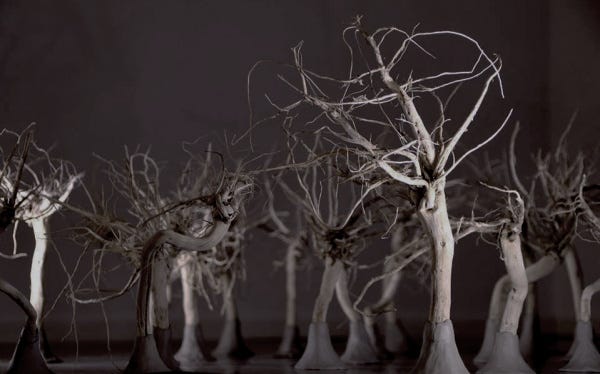
Sea Beet, Sugar Beet
on the sweetness of Earth and perils of artifice


‘You don’t want to look there, beyond the wild and sandy edge of light, at all that mud and mangel-wurzel. At all that desolation and winter. But at some point you have to look at this land. Because you know, whether you like it or not, that the summer holiday is over.’
We began our online Dark Kitchen series in 2018, as an exploration of food culture in times of fall, in the company of artists, filmmakers, writers and activists. In the book that followed, Dark Mountain: Issue 23, head chef Charlotte Du Cann goes into the field to report on the mythic bargain between the wild and arable lands, and the consequences of our forgetting it in a sugar-coated modern world, With selected images from the issue, now on offer until the end of the month.
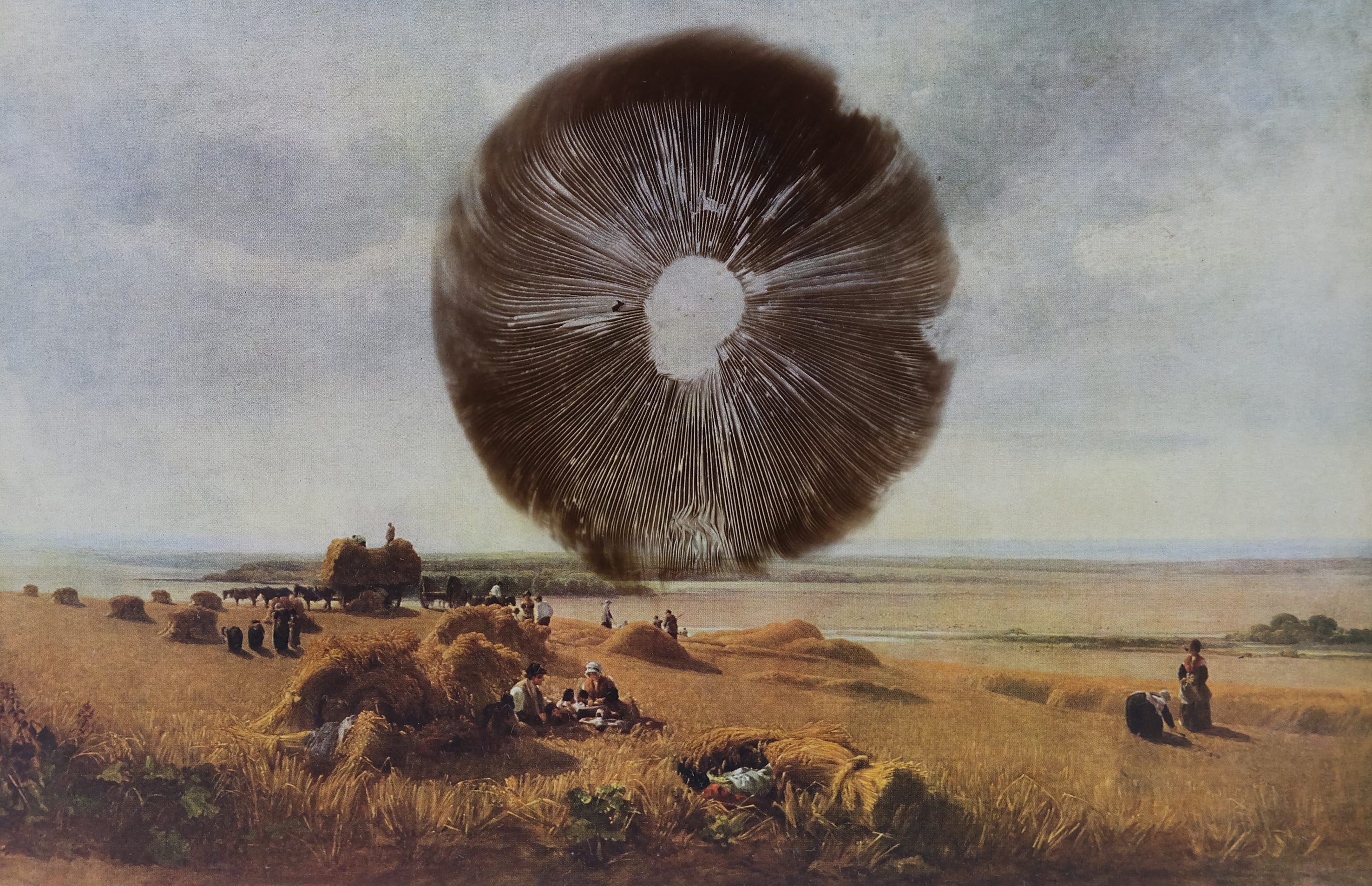
BLACK AND WHITE BIRDS RISING AND CALLING over the flatlands. Above a field, lapwings flick and turn in a spiral; down an estuary, oystercatchers flash and chase the tide. A big cloudy sky, wind from the south, running through golden reeds. On the ground, two plants – one wild, one tamed – and the stories they tell us, should we go into the territory and listen.
The summer the visitors flock from the cities to the sandy lands: the children run shrieking down the beach, the swimmers bask in the sea, the wild sea beet holds the line between the sand and clay. Beyond the dunes lies the hinterland of East Anglia, where the sea beet’s domesticated cousin, sugar beet, dwells in its millions in thousands of identical acres. The wild ancestor plant lives in the shingle and river margins, distinguished by its thick shiny leaves that cook up well as a salty chard or spinach. The modern cultivar is distinguished by its root, which, when harvested in the bitterness of January, you see piled in great pale yellow mounds left by grinding machines that churn the soil and slash its leaves, or storming down the dark lane in trucks en route to the refinery at Cantley.
You don’t want to look there, beyond the wild and sandy edge of light, at all that mud and mangel-wurzel. At all that desolation and winter. But at some point you have to look at this land. Because you know, whether you like it or not, that the summer holiday is over.
I have lived in this double territory for 20 years, surrounded by beet and barley, and sometimes by oats, potatoes and peas, by the noise of the industrial agricultural machine. When I first came my gaze was focused entirely on its wild margins. One day, just as the year was turning, I caught sight of something crouched in the middle of an expanse of green spikes: two sleek forms facing the sun, observing me as I walked down the lane. Hares! The hare takes up position in the centre of the field so she can see everything around her. She knows she can outrun us all and so, in this moment I found myself regarded in that direct startling way wild creatures look at you.
As I returned the hares’ gaze I realised I was looking at something I had ignored: the great loneliness of the field which contained them. That was when I began to look at the agricultural fields no one notices, even when they provide our food every day, or we live right next to them.
East Anglia is not a romantic land. It lacks poetry and lakes and mountains. No one wants to live in George Crabbe’s Borough or sit in Arnold Wesker’s kitchen. But in times of adversity, you don’t need fairy castles or postcard views. What helps everyone thrive is an ability to see what is really there.
Afterwards, I went into these unglamourous fields in search of the crops and their stories, beyond their use as commodities or animal feed. I went to find out, as a storm of crises headed our way, how people could be more resilient, not just in the way we sourced our food, but how we could cherish it in our imaginations. I worked with a kitchen crew of community activists to create a neighbourhood food culture, deconstructing the food system across shared supper tables each month, cooking community meals (50 at one table), teaching each other to ferment, forage, press apple juice, bake bread, share storerooms, plant vegetables.
I travelled with Josiah and Mark through Suffolk’s rain-washed back country and market towns, visiting smallholdings and growing projects, holding conversations with bakers and growers, orchard guardians, beekeepers and plant scientists. We were looking for the future in a kind of reverse archaeology – seeds for the future, people for the future – how the land and ourselves could be restored.
Each year I walked through the searing yellow squares of rape in spring, through seas of barley rippling in the wind in high summer, gleaned the potatoes and onions that were left after harvest, greeted the jackdaws in their flypast at dusk, watched the sunrise beneath great Suffolk oaks that act as anchors in time, as the layers of green and gold and brown shift their positions within the land. As I walked the words came, my hands began to record what we saw from the centre of the field: poetry about wheat ears, photographs of rainbow-coloured quinoa, celebrations of the farmers who grow heritage landraces of wheat and peas. The beauties of the field you notice close up.
But sugar beet remained without a script. Outside my window, they wait on the field edges, small mountains of roots, dredged with frost. The ugly wurzel sisters, uninvited still.
At night I can hear them thump-thumping into the lorries, stealing away into the darkness.