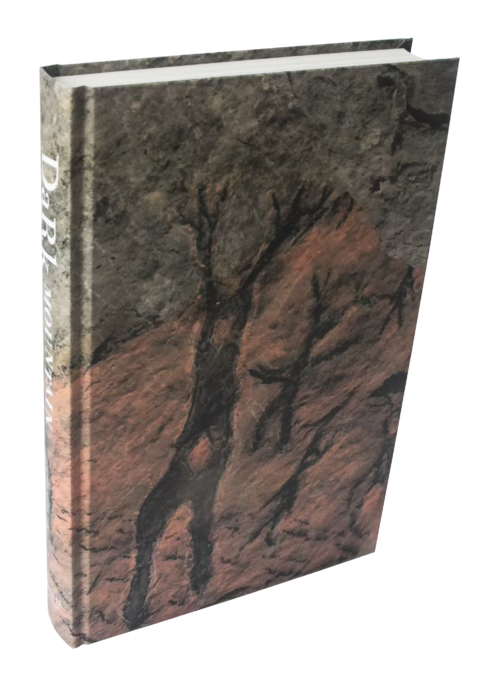
Delve into our spring issue 2018, an innovative collective of prose, poetry and artwork that explores what it means to be human in a world of dissolving boundaries. THIS LIMITED EDITION IS NOW SOLD OUT. A PDF version of Issue 13 is available here. Keep an eye out for our next archive offer later this month!
Time stops, or seems to for a moment: a woman falls from a tree and doesn’t remember falling, or she waits by a fire in a forgetting time, or she stands in a coal pit, in Australia or Germany, her body on the line.
One child is ushered in by the ancestors, another is refused entry by the future. Our paintings on a rock, meant to last for millennia, are swept away by the storm. Our words become covered in leaves, entwined with the lost tracks of animals. Letters turn into trees, pages burst into flames, language fragments and coheres in another shape.
What happens when we capture and inhabit that moment? When we hold time in our bodies and not in our minds? What story do we now tell?
The thirteenth Dark Mountain book focuses on what ‘being human’ might mean in an age of rapid ecological and social change. From the trepidations of bringing a human life into the world, to the responses which rise within us – humour, grief, despair, concern – when confronted daily with a society veering out of control.
Eric Robertson and Emma Giffard examine the familial and social burdens we inherit; Andrew Boyd‘s ‘gallows humour’ highlights the crucial role of laughter in serious times. Many of the works imagine what it might feel like to see ourselves more as biotic constituents living in emergent ecosystems, rather than as mere social conscripts tied to entrenched and tired ideologies. Kate Walters’ Horse Island Woman and Meinrad Craighead’s Woman with Ravens show the fluid relationship between the human and the non-human, while in Katie Holten’s swirling list of microbial flora found on and in our own bodies, we see the collective bloom of the myriad communities of organisms that we refer to with the single term human.
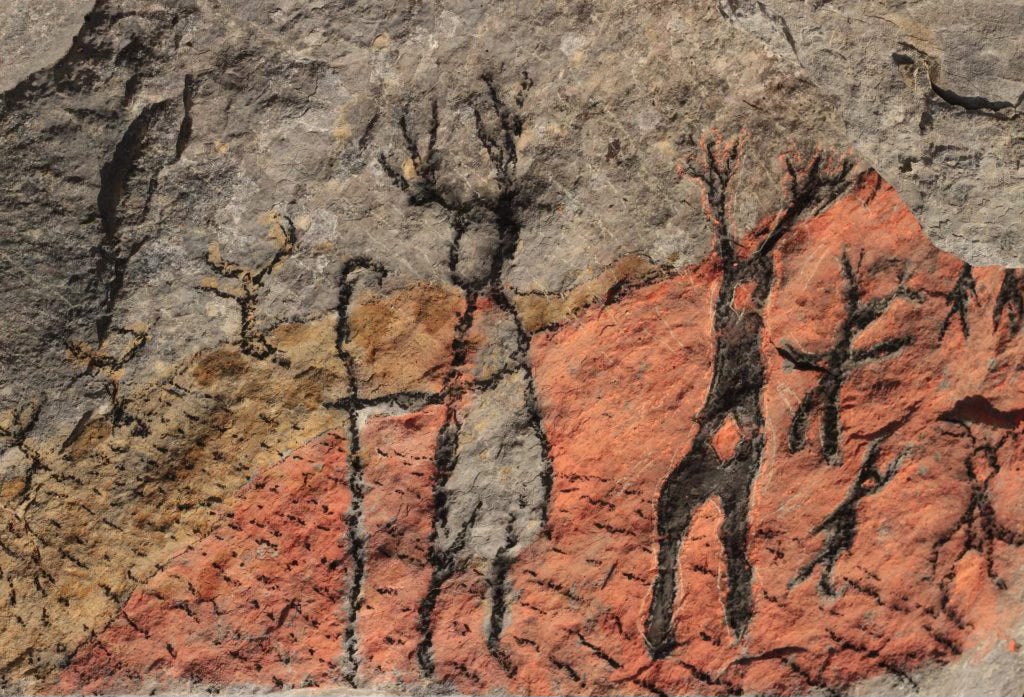
Walk Out Into the Rocks with Issue 13 cover artist Caroline Ross and discover how the issue’s artwork emerged from ‘hangman’s ochre from Oxfordshire; rosso ercolano, a red ochre from Italy, willow charcoal; some water and a bristle brush’ and take a peek between its ‘covers of painted limestone’ through Charlotte Du Cann’s Techne ‘on sparking the inner and outer fires at winter solstice’, a ‘thank you letter of sorts, for a practice and a vocabulary for inner and outer transformation’.
How heated do things have to become until we can reforge ourselves, to work the iron in our soul? If we fed the fire all our stories, everything we needed to die to, could we reforge the world into a different shape?