

How Not to Save the World
Liberating activism from the 'saviour complex'

‘The idea of the elect, detached from religion, becomes a form of exceptionalism; an assumption of superiority … It’s exceptionalism that puts us in the position of thinking that perhaps we can save others – rather than asking what they want and need’. Dark Mountain editor Anthea Lawson introduces an extract from her new book, How Not To Save The World that delves into unconscious notions of ‘saving’ as part of ‘doing-good’ that are particular to people from a Christian cultural heritage.
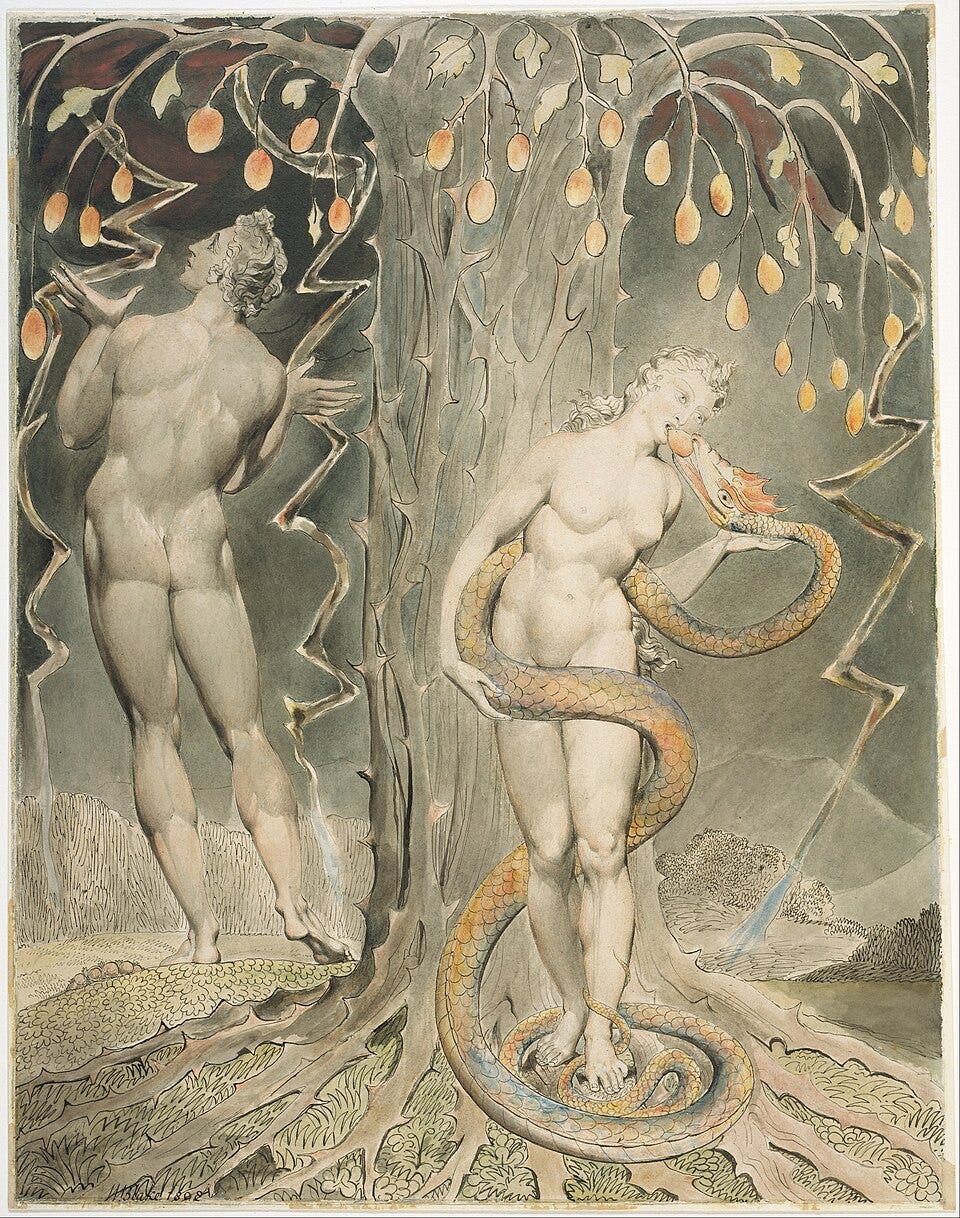
I WANTED TO WRITE HOW NOT TO SAVE THE WORLD for a few reasons. One of them was to share some antidotes to the classic pitfalls of progressive activism whose deep roots form, I think, a kind of saviour complex. In my first book The Entangled Activist I had encouraged us to consider ourselves as not separate – as entirely entangled, in fact – with everything that we might be trying to change, and had shown from a variety of theoretical perspectives that the activist habit of seeing ourselves as separate from, indeed, superior to everyone else is a delusion worth getting over.
Well, fine, but that being so, what are we then to do? In The Entangled Activist I had gestured at some of the dispositions – habits of mind and emotion – that might help. Now, with How Not To Save The World I wanted to get more granular, offering practical examples of people contributing to their communities and in solidarity with others without tripping over their own inner stories. But I also wanted to investigate the very idea of ‘saving’ at all.
My suggestion is that a subconscious ‘save-the-world’ script animates many forms of changemaking, activism and doing good, whether in philanthropic, charity, NGO, social movement, grassroots or community endeavours. Based on interviews with activists – and critical reflection on three decades of my own campaigning – my proposition is that the script runs as follows: I’m good. I protest. I’m pure. I know better than you. I save people. I am a hero. I must save the world NOW!
Some of this comes from our shared human psychology; some of it from culture. In the UK, where the book focuses, the script is shaped by Christianity, by class, and by empire.
I’m not saying that everyone is running all of this script. But I observe that many of us who are trying to do good are running some of it. Nor am I suggesting that anyone holds these statements literally; these are subterranean drivers of our behaviour. The script is far older than the current culture wars and did not create them, but ratchets up progressive people’s participation in them.
The save-the-world script can steer us to moralise rather than to connect; to think that providing information is sufficient rather than organising to build power; to approach people as recipients of ‘saving’ rather than in solidarity and to see the task of saving the world as something we must shoulder individually. Indeed – and perhaps of specific interest to some Dark Mountain readers, the script encourages us to think that the task is ‘saving the world’, full stop.
It was in response to a certain kind of unthinking environmental ‘we can save this’ attitude that Dark Mountain was founded. The idea of ‘saving the world’, taken uncritically, can imply that the task is to return the middle classes of the Global North to the lifestyle they were enjoying before realising the truth about climate and ecological breakdown.
As I have slowly come to see it, a healthier aim might be to work as best we can, in the time we each of us have, towards a world where we put life and the relationships that support it and make it worth living at the centre of whatever we do. To do this even in times of breakdown, even when we are having to focus on adaptation and resilience as much as prevention.
A healthier aim might be to work as best we can … towards a world where we put life and the relationships that support it and make it worth living at the centre of whatever we do.
I especially wanted to do this as an act of resourcing at a time of political disruption, when old models of influence are not working, when the far right is making strides and more people are feeling frantic (which is when we’re most likely to unthinkingly pick up the script), and when attacks on protest are gathering pace, whether from anti-woke culture warriors or the state. More than 280 peaceful protesters against fossil fuel hegemony and Israel’s genocide in Gaza have served prison sentences in the UK since 2019. By any measure this is a disturbing authoritarian acceleration, but by pitting ‘protesters’ against ‘the people’, state repression of protest also reinforces far right narratives.
Another reason for wanting to write this book, however, was to explore the very idea of ‘saving’ at all, particularly as it manifests in attempts at solidarity There is already plenty of discourse in the helping professions about the ‘white saviour’, who combines benevolent intention with lack of awareness of the histories and structural factors that have resulted in inequality in the first place. There are many well-founded complaints about white-saviour behaviour, and many declarations of intention to avoid being a white saviour. But when a script runs deep in the collective psyche, declarations of purity and good intent are likely to be insufficient.
The ‘white’ component of the white saviour is a creation of racism and empire and is most evident in the structural politics of aid. But the saving mentality also arises across class divisions within the UK. I see it active in politics, the voluntary sector and philanthropy, in the latter helping to justify holding on to wealth endowments that if more generously released could do much to build community-level resistance to the far right and to climate and ecological breakdown.
Speaking to British activists from other faith traditions, I began to see that while service, solidarity and charity were cross-cultural concepts and practices, there was something about unconscious notions of ‘saving’ as part of doing-good that was particular to people from Christian cultural heritage.
As with any religion, Christianity’s braided histories have included, on the one hand, the many Christians from all denominations who have drawn, and continue to draw on their faith to resist imperial logics and give service to those in need. Within the UK, powerful strands of Christian social thought and action, both Catholic and Protestant, contributed to the founding of trade unions, the Labour Party, social work, peace movements and climate activism. And on the other hand, of course, Christianity’s histories have also been bound up with oppression and state power.
With my interest in how the dominant culture permeates our attempts to mitigate its negative effects, I was drawn to explore how these two threads themselves are wound together; how those so keen to help in solidarity might still be enacting old hidden power dynamics. I wanted to explore how certain structures of thought and feeling – Christian structures, albeit with God and Jesus taken out – have persisted into secular times. And I wanted to explore how they have intertwined with class to create a very British kind of exceptionalism.
An Extract from ‘How Not to Save the World’
WHILE THE THREADS LINKING CHRISTIANITY to the contemporary white saviour may not form a direct causal line, there is in my view a specific Christian connection to British saviour attitudes. It is rooted in a peculiarly Protestant view of salvation: the idea of the elect, which arrived with the Reformation.
Christianity is hugely plural. Only the Western formations are so focused on Jesus saving us, and what we must do to ensure our salvation; the Orthodox church emphasises how we might become more Christ-like. What are we being saved from, in the Western doctrines? The consequences of our ‘original sin’, which we inherit from Adam and Eve. How do we obtain salvation? For Catholics it is by repentance, faith, and the sacraments, like baptism and the Mass. Through prayer and other intercessions we can try to improve our prospects after death. Protestants have faith alone. Martin Luther built his rebel Protestant theology on the pessimistic views of Paul and the fourth-to-fifth-century North African bishop Augustine of Hippo, both of whom were preoccupied with our inherently dark, fallen human nature and its contrast with the light of Christ. Luther took a strong line: that God has already decided who receives his grace of salvation. This is the doctrine of predestination. God’s chosen are ‘the elect’. If we have faith in God and Jesus, then we are among the elect and are saved. The theology of the two-decades-younger Calvin, which influenced the English and Scottish Puritans and was taken to America, diverged from Luther on some issues but largely agreed with him on predestination.
Sola fide, ‘faith alone,’ is not the source of the saviour behaviour. There was no literal message that engaging in charity – or indeed, for the missionary-minded, conversion – to save other people was going to save our own eternal souls. Quite the opposite: good works cannot lead you to salvation because it’s not up to you. It’s up to God. We should do good works anyway, as an inevitable result of faith. But the idea of being ‘elect’ puts you above those who are not. This isn’t about what it is to be Christian now, and it’s not a mainstream Christian view anyway. Jeremy Kidwell, who teaches theological ethics at the University of Birmingham, considers the idea of the elect to be a rogue ideology that cut loose from a broader system of thinking. But, shorn of its theology, he says, ‘a partial underlying structure remains, and the partiality of that structure renders it dangerous.’ It’s about the hangover in the culture. A sense of the elect was built into class attitudes and I see it doing something that works against solidarity.
I’ve homed in specifically on a Protestant doctrine here, and in my examination of purity earlier in the book, because of how it has shaped the dominant culture in Britain since the Reformation. Tracing the effects of Protestantism on cultural values and, consequently, behaviour, is hardly a new pastime. It’s been going on since the German sociologist Max Weber published The Protestant Ethic and the Spirit of Capitalism in 1905, initiating decades-long debates among historians and sociologists about the extent to which Protestant doctrine encouraged accumulation and investment, against the other, material factors that contributed to the rise of capitalism.
In my view, the Protestant emphasis on being the elect isn’t the only factor in the British saviour attitudes that I’m trying to understand. But it’s part of it. I turned to Christopher Hill, the prolific historian of the seventeenth century, who blended material and class analysis with a deep interest in the power of ideas, values and the commitments in people’s hearts. It was in one of his last books1, about the influence on seventeenth-century thought of the Bible being newly and widely available in English, that I found him tracing the long consequences of the idea of the elect for class and nation in England, in a way that has saviour implications.
Yeomen and parish elites – the middling sort – wielded their Bibles and found the congruence between their Puritan ideology and their economic interests useful when it came to controlling their families and the landless poor. As the revolutionary and regicidal decades of the seventeenth century passed and a new king was crowned, the religious texts began to count for less. But, said Hill, even when stripped of its overt religion, and, eventually, without reference to the Biblical texts at all, an ‘authentic English ideology of pragmatic empiricism’ remained.
‘The English pride themselves on “muddling through”, “conquering an Empire in a fit of absence of mind”, “the English genius for compromise”. These apparent failings of which we boast with mock humility are perhaps vestigial remains of the Calvinist conviction that God will help his elect, regardless of their merits… The English were no longer the people of the Book but they seemed to have been selected.
Hill died in 2003 and didn’t live to see Boris Johnson in Number 10, but that is who I pictured when I read this, possibly because it is saying something about unmerited overconfidence. This attitude survived for centuries, Hill thought, because England became the world’s biggest imperial power, succeeded by the US (also founded on a Puritan sense of being the elect). ‘The gift for holy humbug among Anglo-Saxons,’ he wrote, ‘allows them still to believe that their use of power is different from, and nicer than, that of lesser breeds. It is so much second nature that it is difficult to know in any given instance whether the hypocrisy is conscious or unconscious.’
Believing that your use of power is better and nicer than others! I have heard exactly such sentiments in the comments of British diplomats in various capitals across Africa when discussing their aid strategy vis-à-vis China’s, or from middle-class NGO types justifying their interventions at home or abroad. This is the kind of process that Jeremy Kidwell described: the theology has gone, but the pattern remains as a self-image and a way of relating.
Protestantism’s focus on each soul’s direct relationship with God already encourages an individualistic way of seeing the world. But the idea of the elect, detached from religion, becomes a form of exceptionalism; an assumption of superiority. It’s a strange kind of exceptionalism, though, one so insecure it needs constant reinforcement. Being the elect brought simultaneous superiority (I am chosen!) and a crisis of proof (but how do I really know I’m saved?) that imparted an existential and fundamental sense of scarcity. Both the superiority and the underlying scarcity are all too easily transmitted across generations through embodied individual and relational habits. The superiority is a perfect shield to defend against feeling the scarcity. In the language of psychotherapy, it’s a great recipe for inflation. The exceptionalism functions in the same way as another instruction on the script: I know better than you. Both of them are a shield: the shield of being ‘okay’, which hides the fact that we might not be.
Both the superiority and the underlying scarcity are all too easily transmitted across generations through embodied individual and relational habits.
There’s a reason to do with the translation from Latin of a key New Testament text that Luther’s original Protestant doctrine of salvation for the elect was named justification by faith alone. But it’s interesting that the sense of being deserving (whether of God’s grace, for Protestants, or of wealth, for those who have it) helps to justify greater access to material resources.
The American political philosopher Michael Sandel takes up the Reformation’s ‘tense dialectic of grace and merit’ in his examination of meritocracy. It was hard, he writes, to resist the meritocratic implication of the Protestant work ethic. Good works as a sign of being the elect curdled into good works as a source. The ‘ethic of mastery and self-making overwhelmed the ethic of gratitude and humility.’ Sandel is thinking not about saviour politics but the dark side of meritocracy – those it leaves behind – and its contemporary role in contributing to the resentment that is exploited by the radical right. But underneath, we’re talking about the same dynamic – and, in any case, grappling with our saviour tendencies might improve our chances of facing up to the far right. It’s exceptionalism that puts us in the position of thinking that perhaps we can save others – rather than asking what they want and need. Exceptionalism is tied up with economic inequality, whether within Britain or in relation to other nations. If we’ve grown up with inequality, it can be easy to think that this is just how things are, rather than that it is the result of political decisions. If we think we deserve to be where we are, then we can be more complacent about why inequalities exist; we can think that charity or philanthropy is enough and that we don’t need to push for fairer political and economic systems. Greater humility about the position we are in, and how things might easily be otherwise, leads to a different kind of relationship with those who are struggling more. And in this bumpy post-Brexit world, it might help to build a different kind of politics.
How Not To Save The World was published on 4th June 2026 by Oneworld (£10.99).


Anthea Lawson has fought for many issues over three decades including controls on the arms trade and an end to the financial secrecy offered by tax havens. After training as a journalist at The Times, she worked for campaign groups including Global Witness and Amnesty International. Do check out Anthea’s recent Substack review of ‘Love, Anger and Betrayal: Just Stop Oil’s Young Climate Campaigners’ by Jonathon Porritt.
How Not To Save The World: Doing Good Without Annoying Everyone is a book for anyone who has looked at politics or public discourse and thought, ‘we need better than this.’ The fervour that drives us to change the world can create blind spots, where we don’t see our own behaviour, or disregard it because the cause is urgent. Realistic, candid and hopeful, it’s a sympathetic exploration of alternatives to righteousness, ‘purity traps’ and other unhelpful habits – an antidote to the saviour complex and the very idea of ‘saving the world’.
‘Read it and weep, laugh, cringe… it might bring more compassion and togetherness in a broken world.’ Dr. Gail Bradbrook, co-founder of Extinction Rebellion
Find out more about Anthea’s work on her website and read her pieces for Dark Mountain’s online edition here.
Our Latest Issue
Dark Mountain: Issue 29 (£19.99)
Our Spring 2026 anthology is a hardback collection that steps outside the human bubble and puts animals at its heart. Order from our website or take out a subscription to future issues of Dark Mountain and get Issue 29 for only £14.99.

The Dark Mountain Project is an entirely reader-funded organisation. If you enjoy these newsletters or posts, please consider supporting our work by visiting our shop or becoming a subscriber to our books and/or our online weekly edition on Substack. All back issues in the archive are available both in print (Issues 21, 22, 25-28) and PDFs (from £5). Many thanks!
Christopher Hill, The English Bible and the Seventeenth Century Revolution, Penguin, 1993
Excellent. Ramifications of the Puritan ethic and pathos are rampant in our imperiled world. The aspects of it highlighted in Lawson's work reminds me of a button popular among a certain satirical demographics in the 60s, which read: If I don't save the world. who will?
Placing life at the centre and honouring that we are all life and we are all entangled. And yes to liberation from the "saviour complex".