

A Small Wave in the Sea


‘The ancestral wisdom of the sea is held in stones and shells, in the whelks that nest themselves in granite and the whales that fall into the depths to become constellations of fossils.’ Writer and marine ecologist Alexander McMaster ventures into the sea and desert, visiting tombs in Egypt and his native Ireland, and the bones of ancient whales emerging from the Sahara sand. Amidst ecological fracturing rooted in own disconnection, remembering our deep time immersion in the world and ancestral connection to other creatures may help us chart a course through a turbulent era. You can also find Alex’s harrowing piece on migrant search-and-rescue in the Mediterranean in our Issue 26: Dark Ocean.
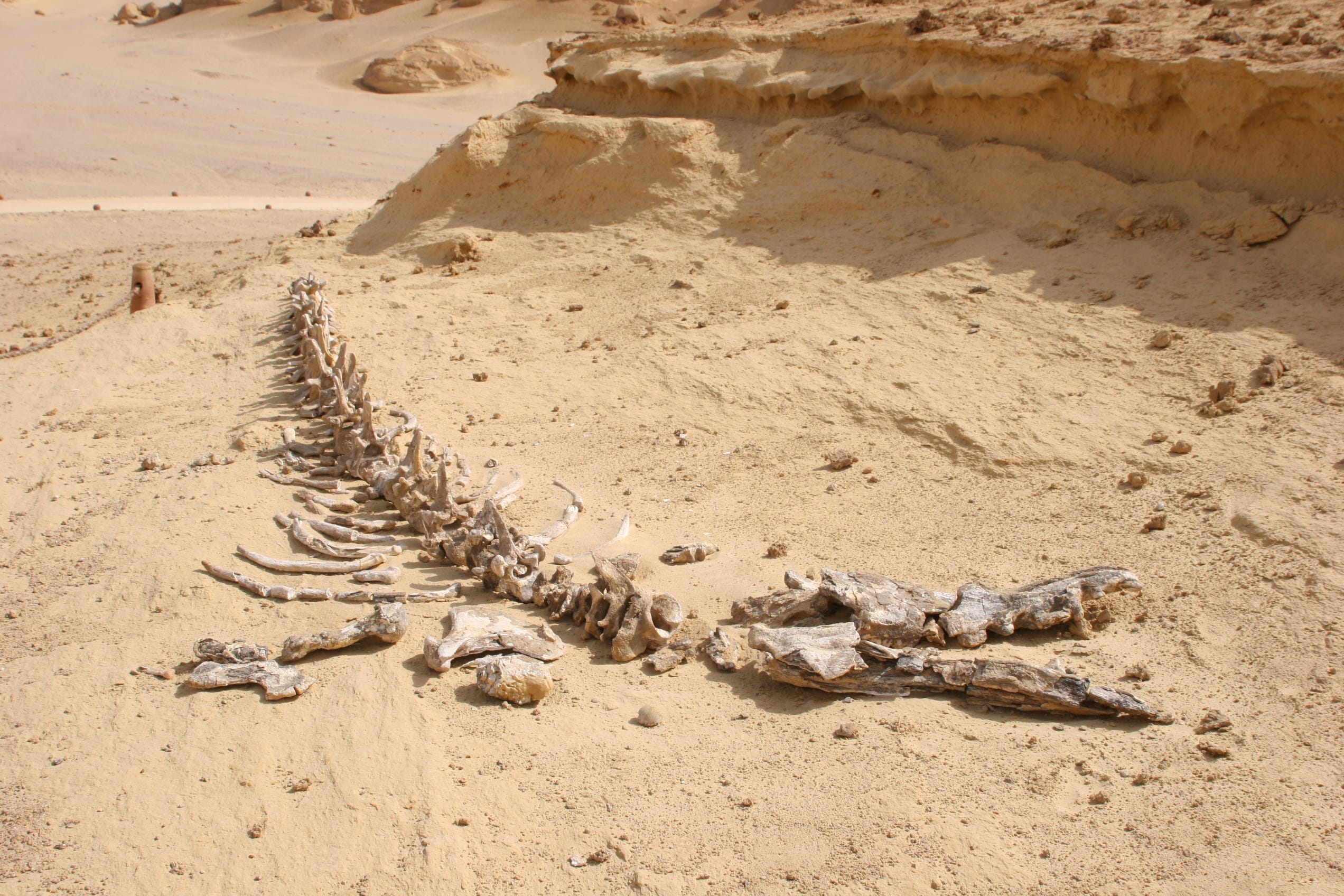
THERE ARE WHALES IN THE SAHARA DESERT, at Wadi al-Hitan in Egypt, ruins of bleached bones shipwrecked and stripped in the dry wind. Three of the whales are Basilosaurids, extinct ancestor of the modern-day whales that pitch the horizon of our blue world. The Greek origin of its name speaks to the serpentine form of its skeleton – basileus, from king, and sauros, from lizard. The lizard king of a barren sea, its vestigial remains are disinterred as sandstone breaks down and becomes desert. The whale bones are relics of the past that meet with the present in constellation, a flash of ancestry burning through rock and sand.
The coexistence of life and death is apparent in Egypt, where reverence is paid to the rising and setting of the sun, the flooding of the Nile, the diurnal rebirth of lotus flowers. When I visited the Valley of the Kings and Queens on the west bank of Luxor, I found gold-embellished tomb walls shrinking deep into the mountainside and vanishing to eternal darkness. The entrances were subtle and the geometry uncomplicated, laid out to represent the sun’s nightly journey – yet only a light carried down from the world of the living animated the façades, gilded renditions of the past in shattered fragments. Time dripped through the heavy layers of rock, slowing down to timelessness as it escaped the thin surface of the world. Whenever time seems to stand still, I suspect that we are getting a sense of its true expansiveness, the way in which it saturates everything.
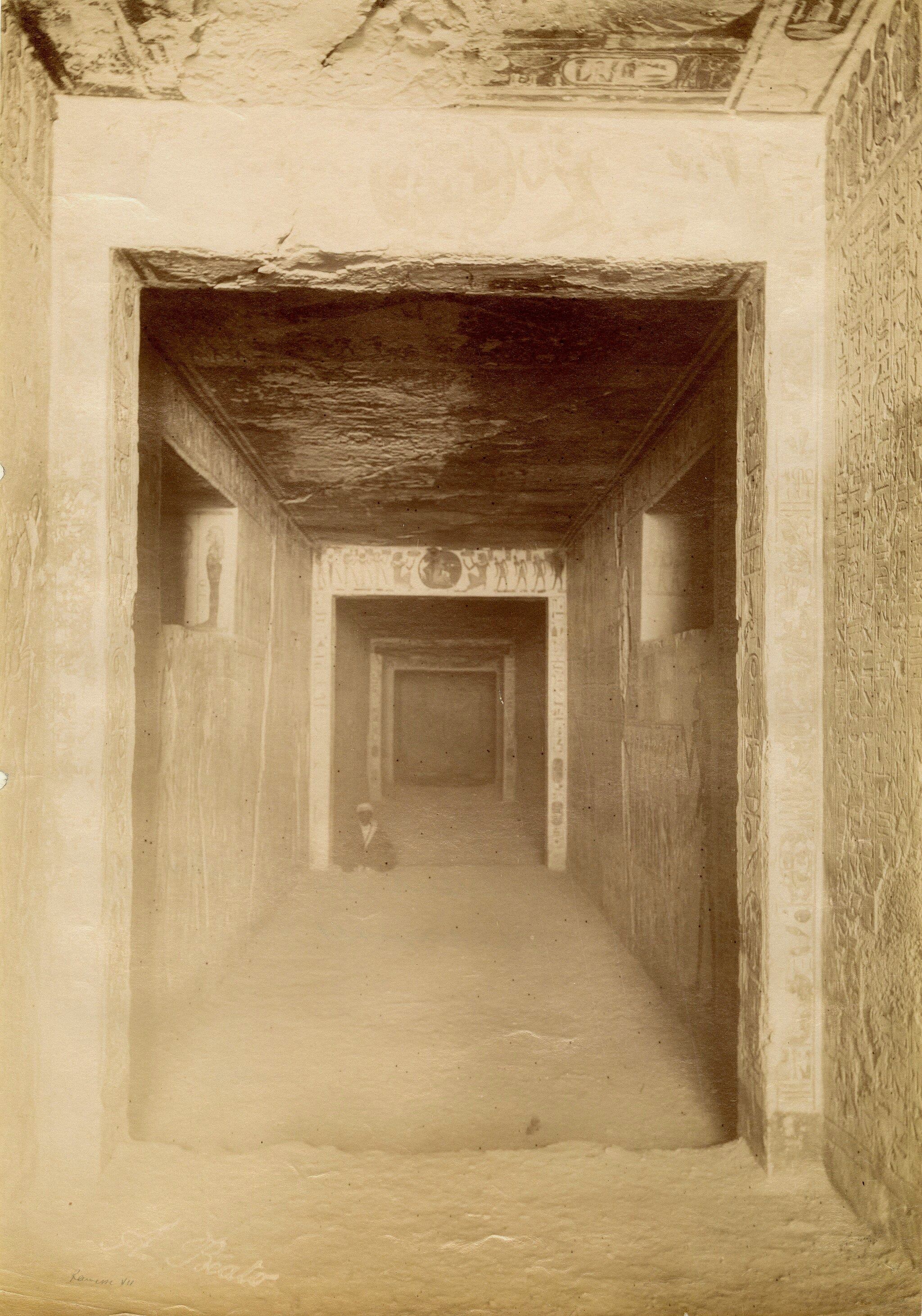
Modern thinkers often perceive time in linear sequences. Geologists and archaeologists consider it in layers, but the builders of the tombs in Luxor likely worked by ancient concepts of time and eternity, neheh and djet, the former as time in constant motion and the latter representing completeness. The rolling wave, and the infinite ocean which surrounds it.

Continue reading this post for free, courtesy of The Dark Mountain Project.
 | A guest post by
|